GNOME is a modern, user-friendly, and completely free desktop environment designed for UNIX-like operating systems, including Linux distributions. It offers a visually appealing interface, intuitive navigation, and a variety of integrated tools that simplify daily tasks. Installing GNOME on a clean vStack Cloud server provides a robust graphical interface, especially for users who prefer desktop environments over command-line interactions. In this guide, we will focus on setting up GNOME with minimal system requirements to ensure optimal performance, even on cloud servers with limited resources.
Preparing for installation
Before installing GNOME, select Ubuntu 22.04 as the operating system for your server. Begin with the initial system setup according to our detailed instructions, which include configuring user accounts, securing SSH access, and updating the system to the latest packages. By starting with a fresh installation, you ensure that GNOME integrates smoothly with the server environment without conflicts from pre-installed packages or configurations. Initial system setup as in our instruction.

MobaXterm – an utility for various types of connection to the server, also considers connecting using VNC.
Updating packages
Update the package and software package index with the following command:
apt update && apt upgrade -yInstalling GNOME on Ubuntu
The ubuntu-gnome-desktop package requires a minimum of 2.5 GB of free space on the system. The package is installed as follows:
apt install ubuntu-gnome-desktop -yThe installation process begins, and depending on the speed, the package is downloaded.
After installing the working environment, install xRDP according to our guide to xRDP installation.
If you are unable to log in with a regular user, it is recommended that you set a password for root by connecting via SSH and restarting the xRDP service.
Let's set up the desktop as follows, start the installation as in Screen 1.

If you can't connect via xRDP. You must set the password for the root user by logging in through the root user and use the command:
passwdLet's choose the keyboard layout as in Screen 2:
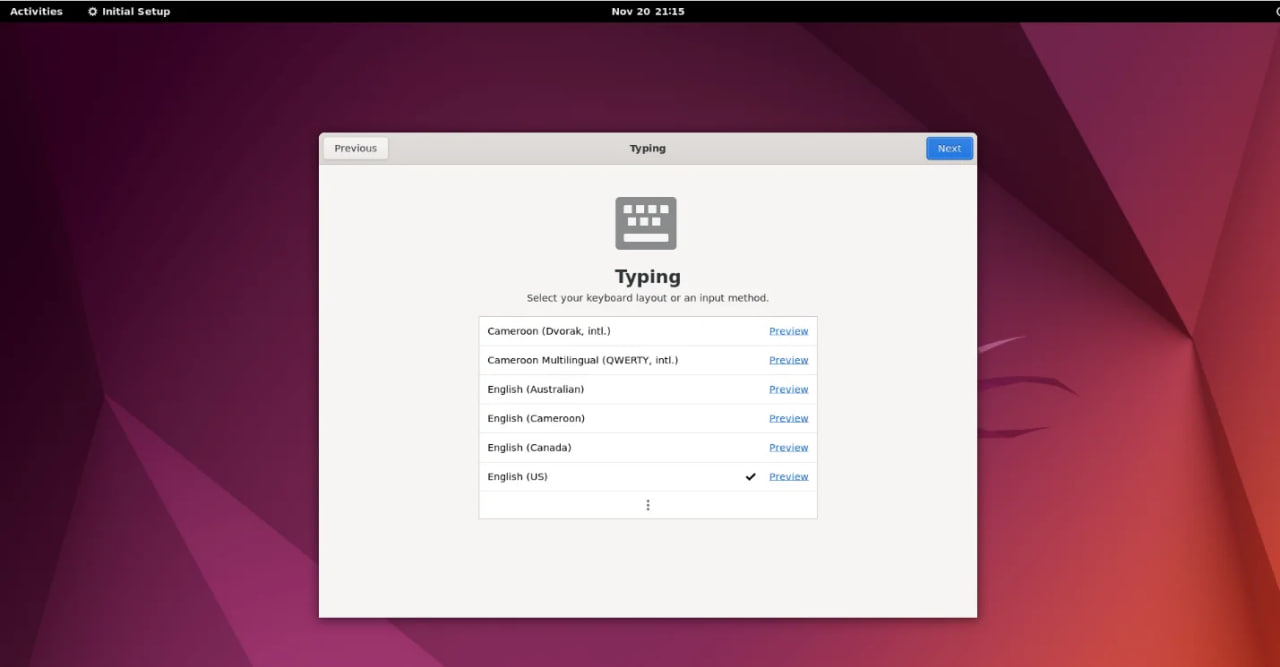
Let's turn off the agreement with the transfer of data to applications requiring geolocation, as shown in Screen 3:
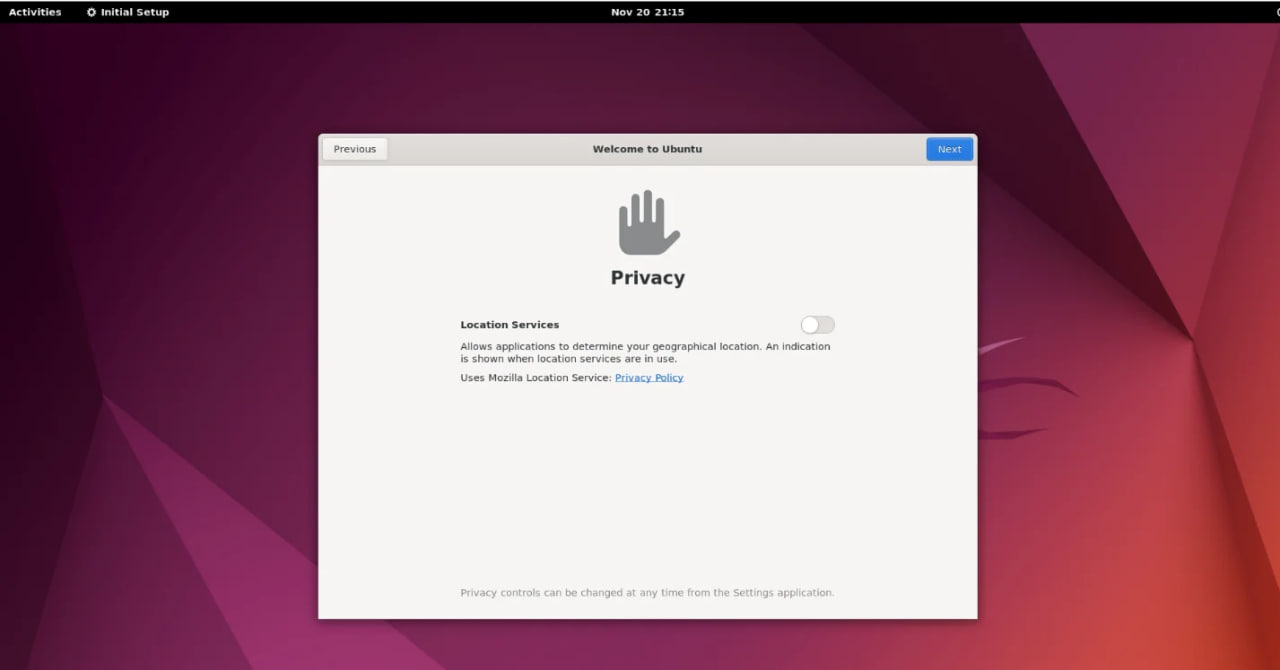
The result is about setting up the working environment as shown in Screen 4, the result is successful:

To check system information, check with the command:
cat /etc/os-releaseAccording to Screen 5:

Let's try to install a web browser using the command:
apt install firefoxAfter installation, launch the browser using the command line:
firefoxThe result is shown in Figure 6:
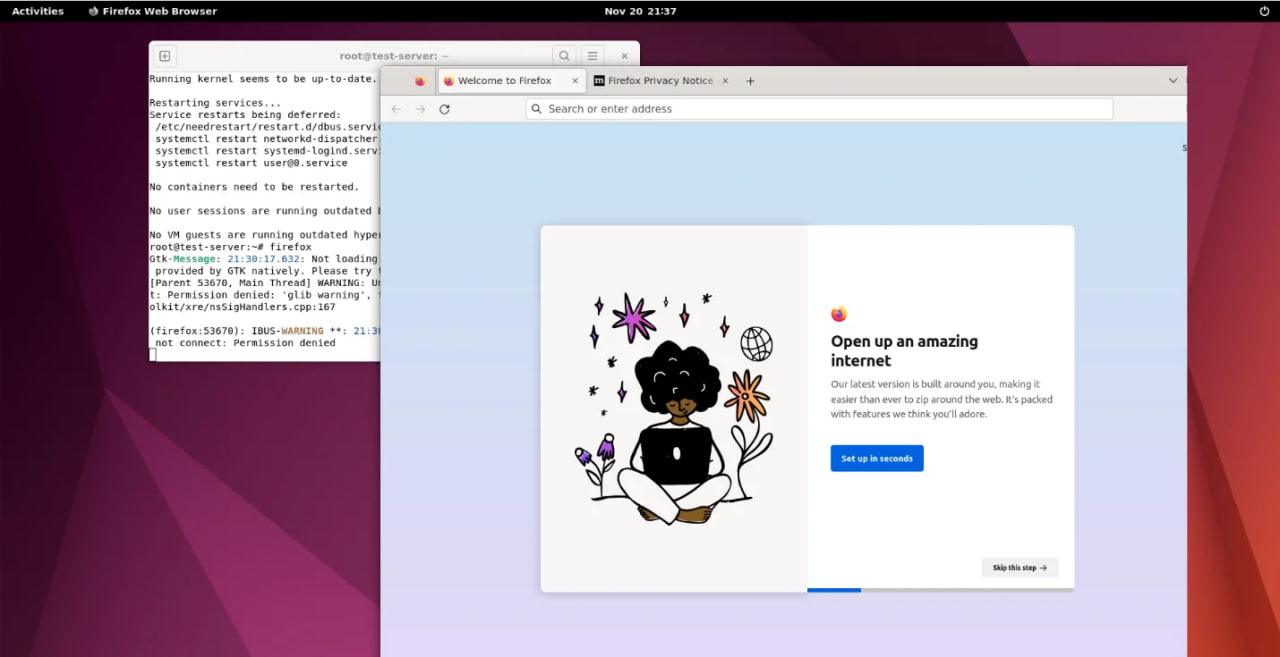
To configure VNC, using our instruction.
When logging in via VNC via MobaXterm, we will add a session with our IP address and specify the port depending on the assignment after starting vncserver. Click “OK” and log in as shown in Screen 7:
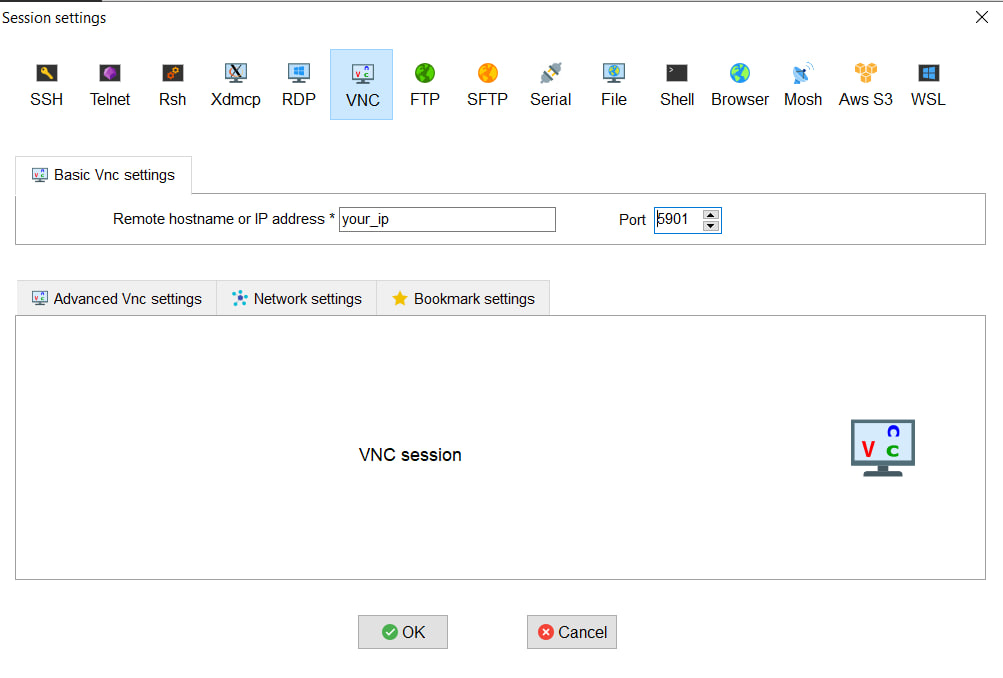
The result of connecting using VNC is shown in Figure 8:

Conclusion
In this guide, we covered the complete process of setting up a GNOME desktop environment on Ubuntu 22.04. We explored two main methods for remote access: connecting via xRDP and using VNC with tools such as Windows’ built-in “Remote Desktop Connection” and MobaXterm.
Through practical comparison, xRDP proved to be the most efficient and versatile solution. It not only provides full graphical access to the desktop environment but also allows launching a command line interface directly within the session—a feature that VNC lacks. By following these steps, you can create a fully functional and accessible GNOME desktop on your cloud server, combining ease of use with powerful remote management capabilities.
FAQ
- Q: What is GNOME and why install it on Ubuntu 22.04?
A: GNOME is a popular free desktop environment for UNIX-like systems. Installing it on Ubuntu 22.04 server provides a graphical interface to simplify system management and user interaction. - Q: How much disk space do I need to install GNOME on Ubuntu 22.04?
A: The ubuntu-gnome-desktop package requires at least 2.5 GB of free disk space for a successful installation. - Q: What is xRDP and why use it?
A: xRDP is a remote desktop protocol server that allows you to connect to the Ubuntu desktop environment remotely using standard Remote Desktop clients, providing efficient GUI access. - Q: How can I fix login issues with xRDP?
A: If you cannot log in via xRDP with a regular user, set a password for the root user via SSH and restart the xRDP service. Use the command passwd to set the password. - Q: What tools can I use to connect to Ubuntu's GNOME desktop remotely?
A: You can use Windows built-in Remote Desktop Connection to connect via xRDP, or MobaXterm to connect using either xRDP or VNC protocols. - Q: What are the differences between xRDP and VNC?
A: xRDP allows command line launching and generally provides better integration with the desktop environment, while VNC is more limited but can be useful for graphical remote sessions. - Q: How do I update packages before installing GNOME?
A: Run apt update && apt upgrade -y to update your package lists and upgrade installed software.